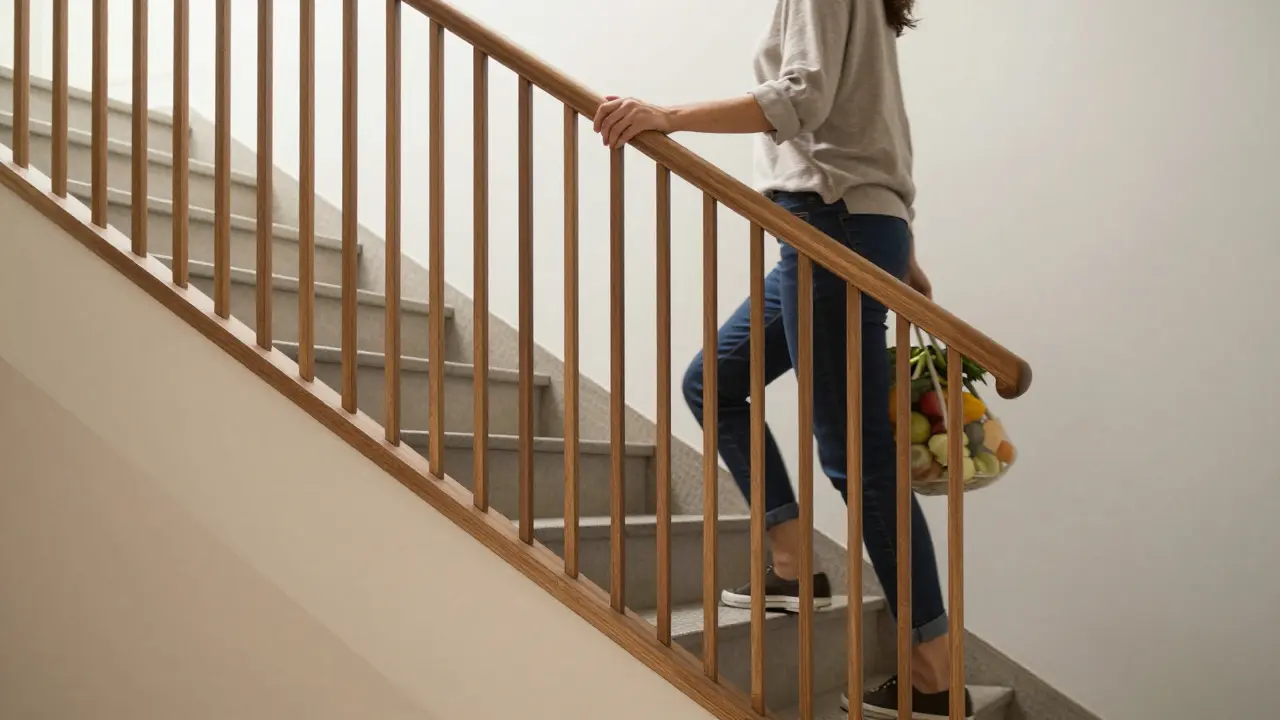
When you walk into a hall and notice the staircase, you don’t usually think about safety rules or building codes. But every step you take, every hand you reach for, every glance at the railing - it’s all been carefully designed to keep you safe. In Czech homes and public buildings, this isn’t left to chance. There are strict rules, and they matter. Not just because the law says so, but because getting them wrong can cost someone their balance - or worse.
Proč zábradlí není jen dekorace
Many people think of handrails as decorative elements - something to match the wood floor or complement the modern steel frame. But a railing isn’t there to look good. It’s there to stop you from falling. Czech building standards, especially ČSN 74 3305 'Ochranná zábradlí', make this crystal clear: every staircase with more than three steps must have a railing. No exceptions. Even if the homeowner insists on going without one, they must sign a written waiver. And even then, inspectors can still reject it during final approval.
The height of the railing matters. The minimum allowed is 90 cm, but the sweet spot is 100 cm. Why? Because that’s the height where most adults naturally rest their hand. Too low, and you’ll have to bend down. Too high, and you’ll have to reach up - both are awkward and reduce the chance you’ll actually use it. For children, this is even more critical. A railing that’s too tall doesn’t help a 5-year-old. That’s why the gaps between vertical balusters must be no wider than 13 cm. That’s about the width of a standard soda can. Anything bigger, and a small child’s head or body could slip through.
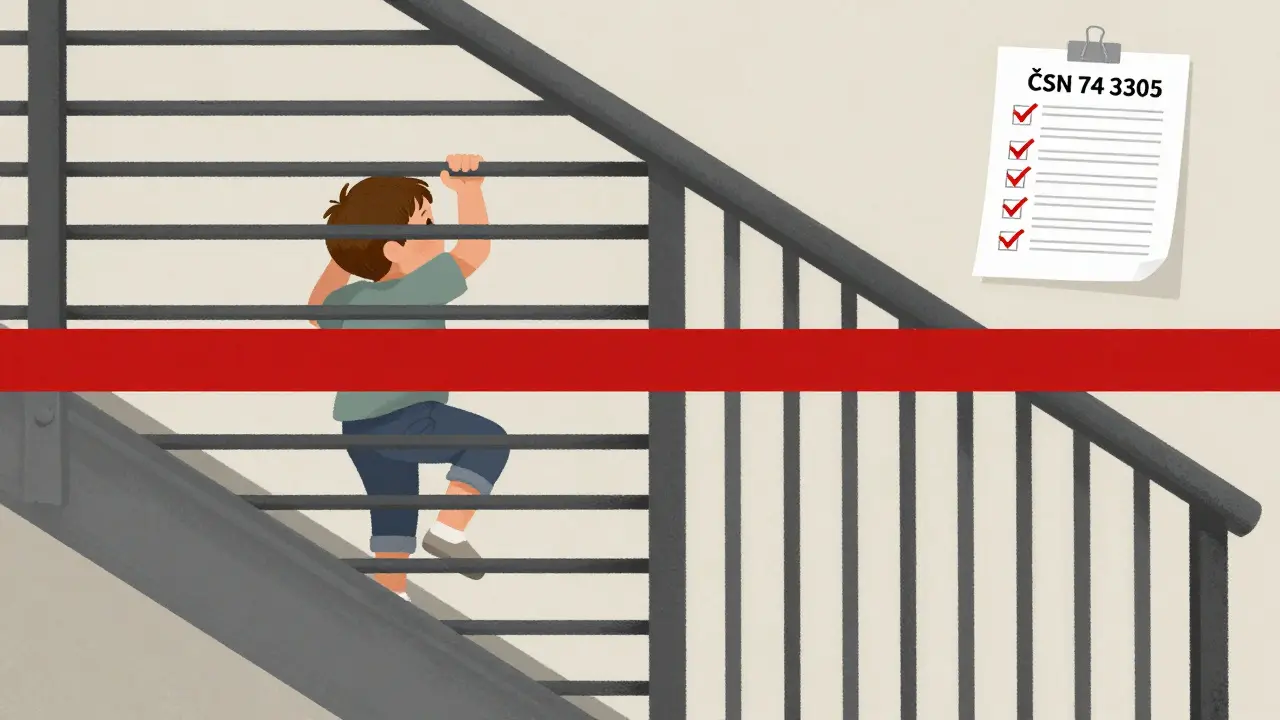
And please - no horizontal bars. I’ve seen them. They look sleek. They look modern. But they’re a ladder for toddlers. One push, one climb, and you’ve created a deadly risk. Vertical slats or solid panels are the only safe choices.
Co říkají normy o schodech
Before you even think about the railing, you need to get the stairs right. The ČSN 73 4130 'Schodiště a šikmé rampy - Základní požadavky' lays out exact numbers, not suggestions. These aren’t guidelines - they’re requirements for passing inspection.
Let’s start with step height. The ideal range is 15 to 18 cm. Why? Because human steps average about 63 cm in length. There’s a simple formula: 2 × step height + tread depth = 63 cm. So if your step is 16 cm high, the tread should be about 31 cm deep. Too shallow, and you’ll trip. Too deep, and you’ll feel like you’re climbing a hill.
The tread depth - the flat part you step on - must be at least 28 cm. But for comfort, aim for 29 to 34 cm. In wider halls, you can afford to go deeper. In narrow staircases, stick to the minimum. And don’t forget: the edge of each step needs a clear, non-slip surface. The coefficient of friction must be at least 0.6 on the leading edge. That means textured stone, rubber inserts, or brushed metal - not polished marble or glossy tiles. If water gets on it, you don’t want someone sliding down like on ice.
And here’s something most homeowners ignore: the number of steps in one flight. You can’t have 20 steps in a row. The maximum is 16 for main staircases, 18 for residential ones. After that, you need a landing. Why? Because fatigue sets in. Momentum builds. A long, uninterrupted flight is dangerous - especially for older people or those carrying groceries. A landing gives you a place to pause, catch your breath, and reset.
Šířka a sklon - neviditelné hranice bezpečnosti
How wide should your staircase be? In a family home, the minimum is 90 cm. In apartment buildings, it’s 110 cm. But if you want people to pass each other easily - say, one person going up, another coming down - go for 120 cm or more. Two adults should be able to walk side by side without squeezing. In tight spaces, this becomes a problem. I’ve seen narrow staircases where people had to turn sideways just to get past each other. That’s not design - that’s a hazard.
The slope is just as important. Most homes use a standard angle of 25° to 35°. That’s comfortable, safe, and efficient. Anything steeper than 35° is considered steep - and in buildings with elevators, it’s actually illegal. Why? Because if the elevator breaks down, people need to be able to walk up without exhaustion. A 40° staircase might look dramatic, but it’s exhausting. And for someone with a cane or a walker? Forget it.
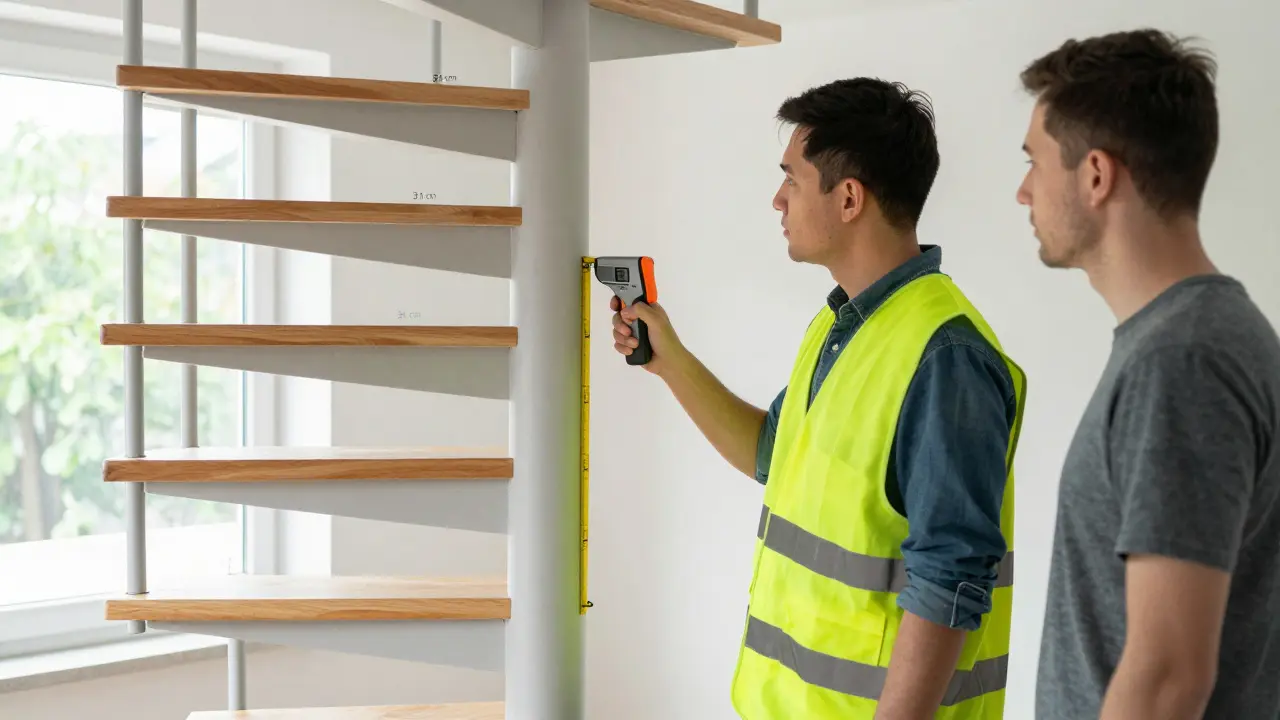
For spiral staircases - the kind that wrap around a central pole - the rules get even stricter. The narrowest point of the tread must be at least 13 cm wide. The widest part, where most people step, needs to be at least 26 cm. And the diameter of the whole spiral? Minimum 125 cm. Anything smaller feels like walking on a tightrope. It’s not just about space - it’s about balance.
Podchody a akustika - detaily, které nikdo nevidí, ale všichni cítí
Have you ever walked under a staircase and bumped your head? That’s not just embarrassing - it’s dangerous. The clearance under the staircase (called the headroom) must be at least 195 cm. That’s taller than most people. If your ceiling is lower, you’re breaking the law. Even if you’re 170 cm tall, you still need that extra 25 cm buffer. People carry things. Kids jump. You don’t want to be the reason someone needs stitches.
And then there’s sound. A staircase isn’t just a path - it’s a noise generator. Every footstep echoes. Every metal rail clanks. The ČSN 73 4130 also requires that staircases meet acoustic standards. That means adding underlayment under wooden steps, using carpet on landings, or installing sound-absorbing panels on walls. A noisy staircase doesn’t just annoy neighbors - it makes the whole building feel cheap and poorly built.
Estetika, která neohrožuje bezpečnost
Here’s the good news: you don’t have to choose between beauty and safety. Czech norms don’t ban design - they just set boundaries. A steel railing with glass panels? Fine, as long as the gaps are under 13 cm and the height is 100 cm. A wooden handrail with a warm stain? Perfect, as long as it’s securely attached and has no sharp edges.
Some designers try to make railings disappear - minimalist, invisible, floating. But that’s not safe. The handrail needs to be noticeable. It needs to be easy to find in the dark. A matte finish is better than a glossy one. A slightly textured surface is better than a smooth one. You want people to grab it instinctively, not think about it.
Color matters too. A white railing on a white wall? You won’t see it. A dark railing against a light floor? That contrast helps your eyes catch it. Use color and material contrast to guide the eye - not to hide the railing.
And what about materials? Wood feels warm. Steel feels modern. Glass feels open. But all of them must meet the same structural rules. The railing must hold 1 kN of force - that’s roughly the weight of a person leaning hard on it. No wobbling. No bending. No loose bolts. If it moves when you touch it, it’s not safe.
Co se děje v praxi - skutečné příklady
I’ve worked on three renovation projects in Zlín where clients wanted to remove railings to create an ‘open look.’ All three were turned down by inspectors. One client even tried to install a railing at 85 cm - claiming it ‘looked better.’ The inspector measured it, took photos, and sent back the approval request. The client ended up spending another €1,200 to rebuild it correctly.
Another case: a new apartment building used polished concrete steps with no anti-slip treatment. After two minor slips in the first month, the management company had to retrofit rubber strips along the edges. It cost more than installing them properly in the first place.
These aren’t rare mistakes. They’re common. People focus on the finish, not the function. But in the long run, the safest design is also the most beautiful - because it works without you thinking about it.
Příprava na kolaudaci - co musíte mít hotové
If you’re building or renovating, here’s your checklist before the final inspection:
- Staircase height: 15-18 cm
- Tread depth: 29-34 cm
- Minimum tread width: 28 cm
- Maximum steps per flight: 16 (main), 18 (residential)
- Headroom: at least 195 cm
- Railing height: 100 cm (minimum 90 cm)
- Gap between balusters: max 13 cm
- No horizontal bars
- Slip resistance: coefficient ≥ 0.6 on step edges
- Staircase width: 110 cm (apartment), 90 cm (home)
- Fixed to wall - no floating structures unless engineered
If you’re missing even one item, you’ll be asked to fix it. No shortcuts. No exceptions. This isn’t about bureaucracy - it’s about preventing injury.
Co dělat, když už máte schodiště
Already built? No need to tear it all down. Start with the railing. If it’s too low, add an extension. If the gaps are too wide, install transparent safety panels. If the steps are slippery, glue on non-slip strips - they’re cheap, easy to install, and come in colors that match your floor.
Check the handrail for wobble. If it moves when you push it, tighten the fixings. If it’s loose, call a carpenter or metalworker. Don’t wait for someone to fall.
And if you have kids? Put a gate at the top and bottom. Even if the railing meets code, toddlers find creative ways to climb. A simple gate adds a layer of safety that no norm can replace.
Může být schodiště v hale bez zábradlí?
Ne. Podle české technické normy ČSN 74 3305 je zábradlí povinné pro každé schodiště s více než třemi schody. I když vlastník trvá na jeho odstranění, musí to podepsat písemně, a při kolaudaci je stále možné, že inspektor schodiště zamítne. Bez zábradlí není schodiště bezpečné a není legální.
Jaká je ideální výška zábradlí?
Ideální výška zábradlí je 100 cm. Minimální povolená výška je 90 cm, ale zábradlí nižší než 100 cm je pro většinu lidí nevhodné - zvláště pro dospělé a osoby s omezenou pohyblivostí. Výška 100 cm umožňuje přirozené držení ruky při chůzi.
Proč nesmí být zábradlí s vodorovnými pruty?
Vodorovné pruty v zábradlí vytvářejí nebezpečnou „žebříkovou“ strukturu, kterou děti mohou použít k lezení. To zvyšuje riziko pádu z výšky. Česká norma proto zakazuje vodorovné prvky v zábradlích v místech, kde se mohou pohybovat děti. Pouze svislá členění nebo plné výplně jsou bezpečné.
Jaký je minimální povolený rozestup mezi schody a zábradlím?
Mezera mezi horním okrajem schodu a spodní hranou zábradlí nesmí přesáhnout 12 cm. Tato mezera zajišťuje, že dítě nebo předmět neklouzne pod zábradlí, a zároveň umožňuje bezpečné držení ruky.
Je povinná protiskluzová úprava schodů?
Ano. Podle ČSN 73 4130 musí mít okraj schodů součinitel smykového tření minimálně 0,6. To znamená, že povrch musí být texturovaný, nebo musí mít protiskluzové vložky. Hladké povrchy, jako běžný lesklý kámen nebo kov, jsou nebezpečné, zejména v místech s vysokou vlhkostí.
Designing a staircase in a hall isn’t about making it look like a magazine photo. It’s about making sure someone can walk up it at 7 a.m., with groceries in both hands, in the dark, without thinking twice. The best design is the one you never notice - because it just works.